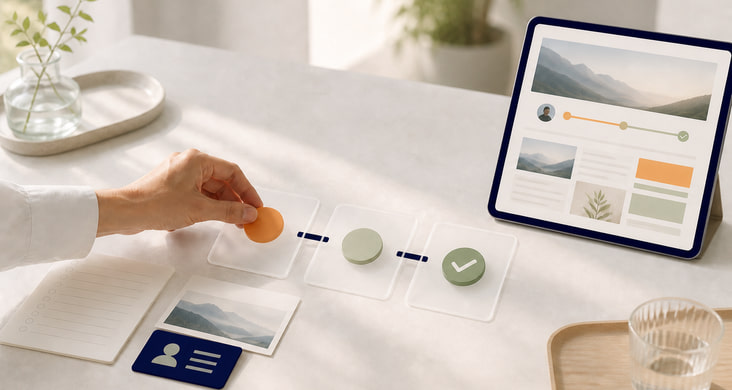
Designing workflows with the people who use them
Who handles a request, what information do they need and where does the work stall? We examine the workflow with the teams involved.
We review workflows with operational teams, management, IT and future users. Where is data entered twice? Who is waiting for approval? Which tasks cannot be completed in the existing system? We define the features needed and prioritise them against the budget and technical requirements.
We design screens and clickable prototypes so the people involved can try their tasks. In parallel, we assess data storage and integrations. The findings guide development in stages, with each addition tested and its release agreed with the responsible teams.
When to choose a custom web application
Common starting points include manually copying data, handling approvals by email or relying on software that only runs on particular office computers.
- Spreadsheets, emails and manual copying create unnecessary work or errors.
- Several systems need to exchange data reliably without manual hand-offs.
- People need a shared workspace for roles, approvals, deadlines, documents or status information.
- An application still serves the business well but needs a sound technical future.
- A digital product needs to be tried as a prototype and then developed for actual use.
From initial analysis to ongoing operation
We design the interface, test workflows with prototypes and build the frontend, backend and integrations.
- Requirements, users, workflows, data flows and existing systems
- Information architecture, wireframes, interactive prototypes and user testing
- Technical architecture, frontend and backend development, databases and integrations
- Automated testing, accessibility, security, performance and documentation
- Technical handover, documentation, support and further development—without unnecessary dependency on a particular person or supplier
Agreeing priorities and technical choices
Business teams, management, IT, privacy specialists and future users each bring different priorities. We make those differences explicit, explain the consequences of the available options and agree the approach that best serves the project as a whole.
Frameworks, platforms and AI tools are choices, not objectives. We test and compare them against the task, context and expected lifetime of the application. Decisions and limitations are documented so that other teams can understand and develop the system in future.
Applications in use
Three projects supporting complex work with purpose-built software.
Related services
- AI application integrationIntegrating knowledge search, assistants and document processing
- Intranets and extranetsSecure access, roles and self-service
- Legacy modernisationMoving Access, Excel and older business applications to the web
- Website maintenance and supportApplication support and planned development
- Headless CMSContent platforms, APIs and hybrid architectures
- AccessibilityNavigation, forms and accessible web applications